
Stop pricing detailing by the hour
Hourly pricing punishes you for getting faster and systematically underprices the vehicles that take longest. It also wrecks the schedule.
Key points
- Hourly pricing penalises competence
- Vehicle size is the variable that matters
- The schedule depends on the same number
- Deposits on all-day jobs
- Add-ons belong in the booking
- Worked example: what hourly pricing costs a fast detailer
- The add-on menu is where the margin is
- Getting size classes right
Hourly pricing penalises competence
If you charge by the hour, every improvement you make — better product, better process, more experience — reduces your revenue for the same work. That is a strange thing to build a business on.
Package pricing inverts it. The customer buys an outcome, and getting faster at delivering that outcome makes you more money rather than less.
Vehicle size is the variable that matters
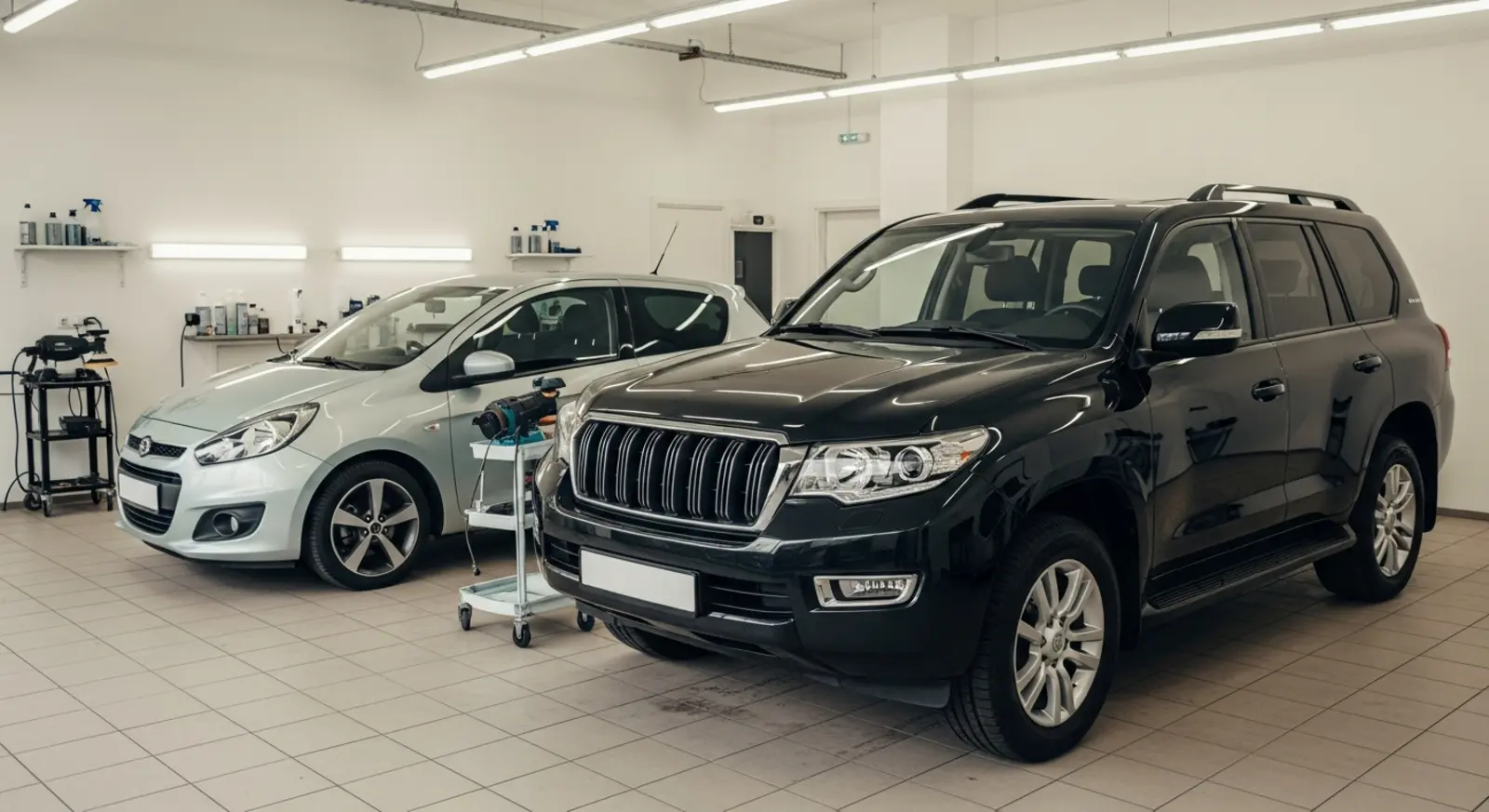
A full interior on a three-row SUV with a dog is not the same job as a compact hatchback, and any pricing model that returns the same number for both is wrong twice. You will lose money on the first and lose the booking on the second.
Pricing packages by size class is the smallest change that fixes it: the same package, with a duration and a price that step up with the vehicle.
The schedule depends on the same number
The duration you attach to a package is not just a pricing input, it is what the calendar reserves. If a full correction is booked as four hours when it reliably takes seven, the day is broken before it starts and every later customer is waiting.
Getting the size classes right therefore fixes the pricing and the schedule in one move, which is unusual and worth doing properly.
Deposits on all-day jobs
A no-show on an express wash is an annoyance. A no-show on a full-day correction is the whole day. It is the clearest case in this industry for taking a deposit at the point of booking.
Framed as money towards the job rather than a cancellation fee, most customers do not blink — and the ones who do were the risk.
Add-ons belong in the booking
Pet hair, engine bay, headlight restoration: agreed verbally at drop-off and then forgotten at checkout is money you did the work for and did not bill.
Selected at booking, priced then, and carried to the invoice, they stop being a memory test.
Worked example: what hourly pricing costs a fast detailer
Two detailers, same shop, same full interior. One has been doing it four years and takes five hours. One has been doing it fifteen and takes three and a half.
At $65 an hour, the faster detailer bills $227 and the slower one bills $325. The shop has priced experience as a discount. Worse, the customer with the filthier vehicle — the one that genuinely takes longer — is the one who benefits, so the hardest jobs subsidise the easiest.
Price the same job by vehicle instead: $199 for a sedan interior, $249 for a three-row SUV, plus $79 for pet hair. The faster detailer now turns two jobs in the time the slower one turns one and a half, and the shop earns from the improvement rather than being penalised for it.
The scheduling effect is the part people miss. A flat price still needs an honest duration behind it, or the calendar goes wrong in the other direction — so each package carries both: what it costs the customer and how long it actually occupies the bay.
The add-on menu is where the margin is
Most detailing shops have a small number of packages and a large number of arguments about what is included. Pet hair, heavy sap, smoke odour and ceramic maintenance all take real time, and quoting them into a base price means either overcharging every clean car or absorbing the bad ones.
Broken out as priced add-ons with their own durations, three things happen at once. The quote becomes defensible, because the customer can see what the extra is for. The schedule becomes accurate, because the add-on adds its own time to the block. And the average ticket rises, because an add-on that appears on a menu gets sold and one that lives in a detailer's head does not.
That last effect is the reason to do it even if pricing is already working. A menu is a sales tool as much as a price list.
Getting size classes right
Three classes is usually enough: compact, standard, and large or extra-dirty. More than that and quoting becomes a negotiation; fewer and you are back to one number being wrong in both directions.
Set the durations from jobs you have actually done rather than from how long you would like them to take. The schedule inherits whatever number you enter, so an optimistic duration does not make the work faster, it just makes the rest of the day late.
Frequently asked
Why is hourly pricing bad for detailing?
It penalises competence. Every improvement in product, process or experience reduces your revenue for the same work. Package pricing means the customer buys an outcome, so getting faster earns you more rather than less.
How should I price different vehicle sizes?
Same package, with duration and price stepping up by size class. A full interior on a three-row SUV is a different job from a compact hatchback, and one number for both loses money on one and the booking on the other.
Does vehicle size affect the schedule as well as the price?
Yes, and this is the part people miss. The duration attached to a package is what the calendar reserves. Book a seven-hour correction as four hours and the day is broken before it starts.
Should I take deposits on detailing jobs?
On long ones, yes. A no-show on an express wash is an annoyance; a no-show on a full-day correction is the entire day and the bay it occupied.
Free booking and business software
TotalPro360 is free for service businesses — no subscription, no per-seat fee, no card to start. Read more about auto detailing software.